
The Reserve Bank of India (RBI) reported a significant 52 per cent year-on-year increase in gains from foreign exchange transactions, reaching 1.69 trillion in FY26. This surge occurred despite the central bank selling a gross $195 billion in the spot market to manage rupee volatility, which saw a 9.85 per cent depreciation.

Indian benchmark indices closed mixed, with the Sensex gaining 113.61 points to 78,079.96 and the Nifty falling 40.10 points to 24,395.85, as elevated crude prices and ongoing geopolitical uncertainty in the Middle East made investors cautious.
Indian benchmark indices closed mixed, with the Sensex gaining 113.61 points to 78,079.96 and the Nifty falling 40.10 points to 24,395.85, as elevated crude prices and ongoing geopolitical uncertainty in the Middle East made investors cautious.

Reserve Bank of India Deputy Governor Rohit Jain has stated that India cannot rely solely on bank balance sheets to fund the extensive investment required for its 'Viksit Bharat' (developed India) goal by 2047, emphasising the critical need for deeper corporate bond, foreign exchange, and derivatives markets.

Analysts predict that geopolitical developments, particularly surrounding the Strait of Hormuz and the US-Iran standoff, along with crude oil prices, will be the primary factors influencing stock market movement in the coming week. Investors will also monitor foreign institutional flows and the Federal Open Market Committee (FOMC) minutes for signals on the Federal Reserve's policy outlook.

India is hosting the BRICS summit, leveraging the platform to address global trade tensions and champion the developmental priorities of the Global South, including food, energy, and supply chain security. The summit, attended by leaders like President Xi Jinping and Vladimir Putin, will focus on resilience, innovation, cooperation, and sustainability, with India aiming to strengthen intra-BRICS collaboration and discuss global matters. The expanded BRICS grouping represents a significant portion of the world's population and GDP, making its discussions crucial for global economic stability.

Indian benchmark equity indices, Sensex and Nifty, experienced declines in early trade due to a surge in Brent crude oil prices, which rose above USD 90 per barrel, coupled with subdued global cues and ongoing US-Iran skirmishes. Track Sensex, Nifty on Auigust 12.


'Value is not where you make money in India. It never has been.' 'You have to buy momentum.' 'Momentum is in technology, and I don't see that slowing down because I believe the AI infrastructure boom is going to last for a while.'

Foreign investors have withdrawn over Rs 88,000 crore from Indian equities this month, driven by geopolitical tensions, a weak rupee, and concerns about rising crude oil prices.

The Indian government has permitted Foreign Direct Investment (FDI) in an inventory-based e-commerce model exclusively for the export of domestically manufactured or produced goods, aiming to boost outbound shipments without affecting small local retailers.

Indian benchmark indices, Sensex and Nifty, closed flat on Friday, with elevated crude oil prices due to geopolitical uncertainties and a rebound in US Treasury yields making investors cautious and preventing a decisive market rally.

Newly listed companies Vedanta Aluminium Metal, SBI Funds Management and Manipal Health Enterprises have entered the Rs 1 trillion mcap list since March 2026.

Subhash Chandra hoped that the lenders would discuss the matter with the borrowers, reconcile the outstanding accounts, and get paid by the borrowers.

HDFC Bank's share in active mutual fund schemes has fallen to multi-year lows, despite overall MF ownership in the bank rising, as the stock faces weak performance, soft margins, and governance concerns.

Indian benchmark indices, Sensex and Nifty, experienced declines in early trade due to a significant spike in crude oil prices, driven by escalating geopolitical uncertainties, despite positive cues from Asian and US markets.

'They are claiming that they are very good in governance. All governments do propaganda. This is the propaganda of the government that they are doing very well, in spite of all the troubles.'
'They are claiming that they are very good in governance. All governments do propaganda. This is the propaganda of the government that they are doing very well, in spite of all the troubles.'

Indian benchmark stock indices, Sensex and Nifty, experienced mixed trading following the introduction of a new Closing Auction Session (CAS) for shares with futures and options (F&O) contracts, aimed at enhancing price discovery transparency. Track Sensex, Nifty on August 4

Indian benchmark indices, Sensex and Nifty, experienced significant declines, with the Sensex falling 493 points and the Nifty dropping for the sixth consecutive day, primarily due to elevated crude oil prices reaching USD 91 per barrel and diminishing hopes for a diplomatic resolution in West Asia.

'Taxpayers should not ignore any of these notices. Verifying the facts and responding promptly can help resolve issues early and avoid unnecessary litigation.'

There is no answer to the question of how IN-SPACe invited EOIs for ISRO's mature rockets and whether it was based on any government policy decision.

Global financial institutions, including Goldman Sachs and Citigroup, have invested Rs 963 crore in One 97 Communications (Paytm's parent company) through open market transactions, acquiring a 1.34 per cent stake from SAIF Partners and Elevation Capital.

Indian benchmark stock indices, Sensex and Nifty, extended their winning streak to a fourth day, with Nifty surging 1.60 per cent, driven by a sharp decline in crude oil prices and renewed foreign fund inflows.

'The Chinese military cannot advance much in Ladakh, even if they want to.' 'Similarly, in Arunachal Pradesh, they can rename a village or two, intrude here or there, but cannot do much more realistically.'
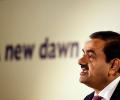
A US federal judge has permanently dismissed the criminal securities-fraud case against Adani Group chairman Gautam Adani and his nephew Sagar, closing nearly two years of prosecution without a trial. Gautam Adani stated, "Truth has prevailed," in response to the ruling.

India's outward foreign direct investment (FDI) plummeted by 47.9 per cent year-on-year to $3 billion in June 2026, according to the Reserve Bank of India (RBI), with declines across equity, debt, and guarantee commitments.

The Uttar Pradesh Special Task Force (STF) has dismantled two significant fraud operations involving crores of rupees in fraudulent share market, cryptocurrency, and forex schemes, leading to multiple arrests and uncovering a vast network of deceit.

Indian benchmark indices Sensex and Nifty experienced a downturn in early trade, primarily influenced by a dip in HDFC Bank shares, persistent outflows from foreign funds, and escalating geopolitical tensions between the US and Iran. Track Sensex, Nifty performance.

Foreign investors have aggressively sold off Indian equities, withdrawing over 48,213 crore in the first 10 days of April, following a record 1.17 lakh crore outflow in March, driven by escalating geopolitical tensions in West Asia, rising crude oil prices, and global inflation concerns.

Fitch Ratings has affirmed India's sovereign credit rating at 'BBB-' with a stable outlook, acknowledging robust growth prospects and strong external finances. However, the agency highlighted concerns over elevated government debt, lagging structural metrics, and potential fiscal spending pressures due to rising youth unemployment.

'Wages have not risen. Rural wages have stagnated. The growth was 0.7 per cent last year. For casual and irregular labour, the wage growth is negative.'
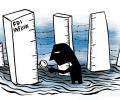
India has significantly improved its position as a global foreign direct investment (FDI) destination, climbing two places to 11th in 2025, with inflows surging by nearly 44 per cent to $38.89 billion, according to the United Nations Conference on Trade and Development (Unctad) World Investment Report 2026.
Indian benchmark indices Sensex and Nifty closed lower, with the Sensex dropping 388 points and Nifty declining 112 points, as a sharp rally in crude oil prices, driven by geopolitical uncertainties and concerns over the Strait of Hormuz, dampened investor sentiment and reignited inflation fears.

Different categories, such as FII and FVCI, will be abolished. Most of them will come under one group, that is, QFI.
Indian benchmark equity indices, Sensex and Nifty, closed lower for multiple consecutive days, with the Nifty extending its losses to a seventh day, primarily due to elevated crude oil prices following the expiry of the US-Iran ceasefire without a diplomatic resolution.

Indian benchmark indices closed marginally higher, with the Sensex gaining over 43 points and the Nifty remaining flat, as a spike in crude oil prices due to geopolitical uncertainties tempered risk appetite.
Foreign investment ceiling in Asset Reconstruction Companies (ARCs) has been increased to 74 per cent from 49 per cent, a move aimed at bringing more foreign expertise in the segment.
Under Sebi guidelines, AIFs can operate broadly in three categories.
